Social Selling: What it is, Why You Should Care
Have you ever heard of “social selling?” It is an increasingly popular sales strategy that leverages social media to build relationships with...
4 min read
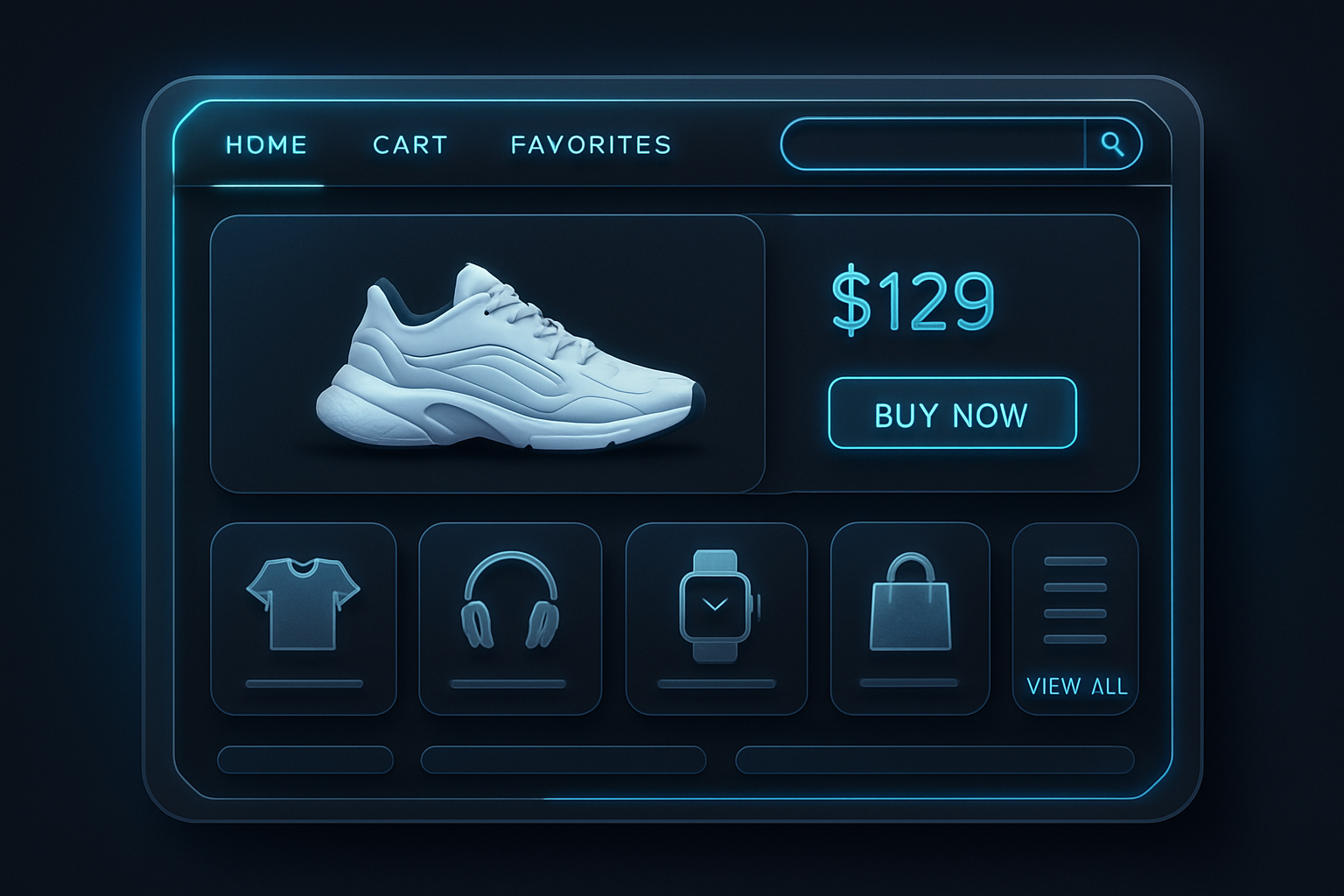
In 2025, e-commerce is quietly entering a new era — one where shoppers might never visit your storefront and instead complete their purchase directly from a conversational AI. The once-novel idea of “AI-shopping assistants” is becoming real, and for Shopify merchants, it could unlock a powerful new sales channel with minimal friction.
That channel is the growing integration between ChatGPT and Shopify. Thanks to a recent partnership between OpenAI and Shopify, the path from product discovery to checkout is shrinking. ChatGPT can now surface products from Shopify stores, show live pricing and availability, and — for supported merchants — enable instant checkout, letting shoppers buy without ever leaving the chat interface.
For store owners, this isn’t just a novelty. It’s potentially a fundamental shift in how e-commerce works. Below I break down what this integration really means — how it’s changing buyer behaviour, what opportunities (and risks) it creates, and how you can start adapting today.
Traditional online shopping follows the classic sequence: a user searches on Google (or browses), lands on your site, browses products, fills a cart, goes through checkout, and finally completes the purchase. Each step is a potential drop-off point.
With ChatGPT’s new shopping flow: shoppers simply ask the AI for a recommendation, see product options, and if the product supports “instant checkout,” tap a Buy button — all within the chat. Payment, fulfillment, and delivery work as normal behind the scenes; the key difference is that the buyer never leaves the chat context.
From the merchant’s perspective, this reduces friction dramatically. For buyers, this significantly lowers the threshold of effort: no site loading, no navigation, no shopping-cart friction. This convenience matters — especially in mobile-first, attention-scarce environments.
When users actively ask ChatGPT for product recommendations — “eco-friendly running shoes under $100,” “best budget headphones for remote work,” etc. — they are often already in a buying mindset. That makes these queries incredibly high value: leads coming from ChatGPT are often closer to purchase intent than cold traffic from organic search.
As Shopify merchants get plugged into ChatGPT’s catalog, you could tap into brand-new traffic that doesn’t depend on SEO, ads, or conventional marketing funnels.
Checkout abandonment is a major pain point for many Shopify stores — friction along the path to conversion is unavoidable online. The chat-based shopping funnel dramatically reduces that friction. For eligible products, a single tap initiates checkout via Stripe / Shop Pay — no multiple page loads, no complicated flow.
This streamlined path can generate higher conversion rates — especially with mobile users, where ease and speed win.
Merely having a Shopify store will no longer be enough. With ChatGPT acting as a discovery engine, product data quality becomes critical. Product titles, descriptions, attributes, pricing, and availability must be accurate and well-structured. Without clean data, AI may skip your listing or mis-represent it.
Similarly, content — blog posts, size guides, FAQ pages, reviews — can help the AI better understand and represent your brand, boosting discoverability inside chat results.
Even before checkout capabilities roll out globally, ChatGPT integration can already support critical e-commerce operations:
Generating product descriptions, seasonal catalog copy or marketing content.
Automating customer support — answering common questions and offering personalized product recommendations to shoppers even outside normal hours.
For small and medium Shopify merchants, that means you can deliver premium-level support and personalization — without scaling headcount.
Of course, this new paradigm is not without its caveats:
Channel attribution becomes murky — When purchases happen inside ChatGPT, tracking which traffic source (ads, organic search, chat assist) drove the sale can be harder. To avoid blind spots, you’ll need to update analytics, UTM tracking, and order-source tags.
You must ensure product data quality — Incomplete or inconsistent data (missing variants, outdated inventory, unclear descriptions) can lead to mis-matches, mis-fulfillments, or the AI skipping your listing altogether. Clean, structured product feeds and consistent metadata are no longer optional.
Limited rollout & geographic restrictions (for now) — As of late 2025, the “Instant Checkout in ChatGPT” feature is initially available to a subset of sellers and markets. Global rollout and multi-item cart support are coming, but for now the feature may not reach your store or region immediately.
That said, early adoption offers a strategic advantage — and the lead time to get your shop AI-ready before competition grows.
If you own a Shopify store, here are the practical steps I recommend to prepare for this AI-commerce shift:
Audit and clean your product catalog immediately — Ensure all product variants, prices, SKUs, images, and descriptive metadata are up to date.
Use AI to enhance product descriptions, SEO, content and support workflows — Tools like ChatGPT can help write or rewrite product pages, restful FAQs, blog content, or even support reply drafts.
Prepare structured, well-formatted content — Because AI will surface information to customers, clarity matters more than ever. Think HTML schema, clean copy, and strong features/benefits.
Monitor metrics beyond traffic: conversion rate, checkout completion, average order value (AOV), and repeat purchase rate — Since discovery may shift from search to AI chat, traffic alone becomes less meaningful.
Plan for multi-channel customer experience: website, chat assistant, social, email — ensure brand voice and customer journey are consistent across touchpoints.
The integration between Shopify and ChatGPT isn't incremental — it's foundational. It signals the emergence of “conversational commerce” — a paradigm where discovery, decision, and purchase happen inside a chat interface, seamlessly, instantly, and with minimal friction.
For forward-thinking store owners, this is a chance not just to survive the shift, but to lead it. By optimizing your catalog, embracing AI-assisted content, and preparing your workflows now, you can capture early mover advantage — and maybe redefine what “online store” even means.
If you haven’t started adapting to this new wave yet, now is the time.


Have you ever heard of “social selling?” It is an increasingly popular sales strategy that leverages social media to build relationships with...

Discover the reasons behind small e-commerce businesses participating in business expos and the benefits they gain from these events.

In the ever-evolving landscape of e-commerce, leveraging the capabilities of Facebook and Instagram for targeted advertising is a game-changer. The...